Monolithic Architecture Explained: A Beginner’s Guide
Learn what monolithic architecture is, how it works, and why it’s a great choice for beginners building simple, fast apps.
By Jean Emmanuel Cadet • 6 min read
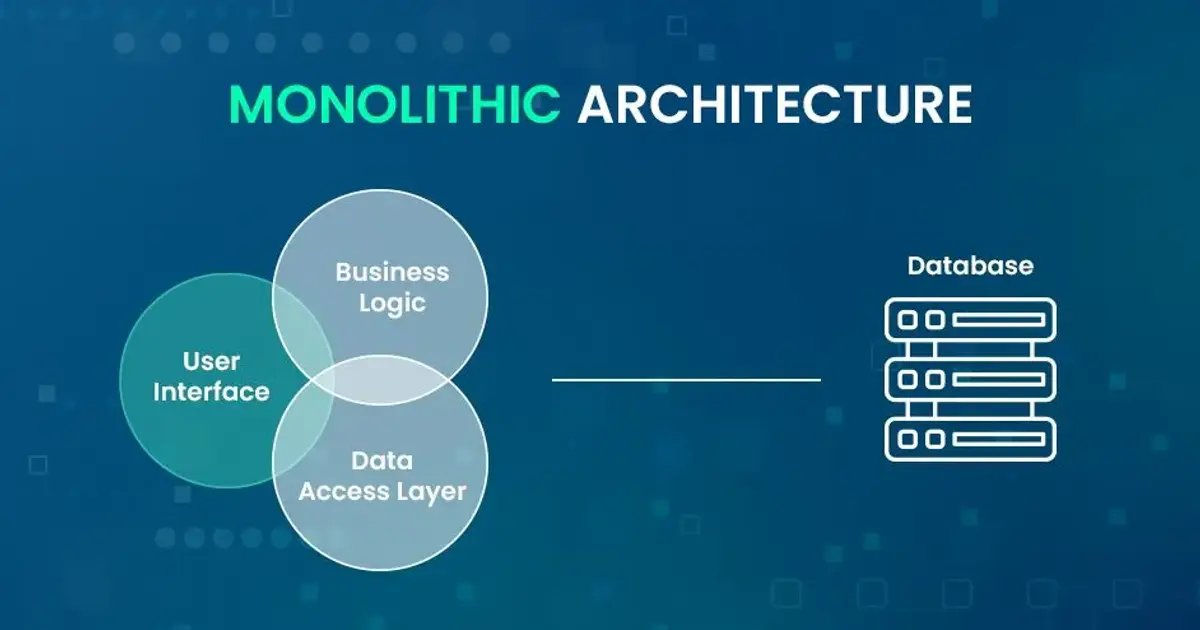
When you’re getting into software development or building your first serious app, one of the first architectural decisions you’ll face is: How should my app be structured?
It’s not always easy to answer. These days, much of the tech talk is about distributed systems, cloud-native services, and microservices. But long before all that, most applications were built using monolithic architecture.
And honestly? It’s still one of the best places to start, especially if you’re just learning or working on a small team.
Let’s take a closer look at what monolithic architecture really is, how it works, why it’s often the go-to choice for beginners, and when it might start to show its limits.
What Is a Monolithic Architecture?
At its core, monolithic architecture means that your entire application—frontend, backend, database interactions, business logic, and everything in between is bundled into one unified codebase. It’s a single program that runs as a single process.
Think of it like cooking a big pot of stew. You throw all your ingredients into one pot: meat, veggies, spices, broth, it all simmers together. That’s your monolithic application. Everything is combined and served from the same container.
This is different from something like microservices, where each “ingredient” would be cooked separately in its pot, on its burner, and then carefully assembled into a dish.
With a monolithic app, if you want to add a feature, you open up the same project. If you want to deploy the app, you deploy the whole thing at once. Simple.
What Does a Monolithic App Look Like in Practice?
Let’s say you’re building a basic e-commerce platform. In a monolithic setup, you might have:
- One project folder that holds everything
- Backend code to manage products, users, payments, etc.
- Frontend templates and assets all live inside the same application
- Database models integrated directly with your backend logic
- A single deployment process (for example, running on one server)
It’s all together in one place. No separate services. No separate deployments. No need to set up multiple environments for each feature.
Key Characteristics of Monolithic Architecture
If you’re still trying to picture what makes an app “monolithic,” here are some of the main traits:
- Single Codebase: Everything lives in one project folder or repository.
- Unified Deployment: You deploy the whole app at once, not in pieces.
- Tight Integration: All features and modules are tightly connected.
- In-Process Communication: Instead of calling an API over the network, components talk directly within the same process.
- Simple Startup: Usually just one command or process to run the app locally.
This simplicity is what makes monolithic architecture so appealing at first. But of course, there’s more to the story.
The Real-World Benefits of Monolithic Apps
So, why would you choose to build a monolithic app instead of something more modern and distributed?
Here’s the thing: monoliths are easy to build and ship quickly. That’s huge when you’re still validating your idea, learning, or trying to move fast without getting bogged down in complexity.
Let’s break down some of the advantages:
Faster Development (Especially at the Start)
With everything in one place, you can build features without worrying about how different services will talk to each other. You don’t need a PhD in Kubernetes to launch your project. One app, one team, one focus.
Easier Testing and Debugging
Since everything runs together, you can write simple unit or integration tests without mocking network calls or juggling complex setups. And when something breaks, you know exactly where to look.
Simpler Deployments
You deploy everything together, which means fewer moving parts to manage. For example, you can push the whole app to a single server or container.
Strong Performance (At First)
Because components communicate directly within the same process, your app can be faster out of the box. There’s no need to make network calls between services.
The Trade-Offs: Where Monolithic Architecture Struggles
Of course, monoliths aren’t perfect. As your application grows, some of the things that made it simple early on can start to hold you back.
Let’s go over the challenges you might face with a monolithic app:
Harder to Scale Selectively
If one part of your app, say, your image processing or real-time chat, gets heavy traffic, you can’t scale just that part easily. You have to scale the whole app, even if most of it doesn’t need more resources.
Risky Deployments
Because you’re deploying everything at once, a small change in one feature could accidentally break something else. It’s harder to isolate problems.
Slower Development Over Time
As more features are added, your codebase grows. Eventually, it can become harder to understand, harder to onboard new developers, and more difficult to make changes without fear of side effects.
Less Resilient
If one part of your app crashes, say, the user login system, it could bring down the entire application since everything runs as one unit. In a microservices setup, one failed service wouldn’t necessarily crash everything else.
Who Should Use Monolithic Architecture?
Monolithic apps are a great fit in several situations:
- You’re a solo developer or working with a small team.
- You want to get an MVP or prototype out quickly.
- Your app is relatively small or straightforward.
- You don’t want to spend time managing infrastructure just yet.
A lot of well-known companies (like Basecamp, GitHub, and Shopify) started with monoliths and only broke their systems up later when they absolutely had to.
Can You Start Monolithic and Evolve Later?
Absolutely. In fact, many developers recommend this path. Start monolithic. Learn the ropes. Keep it simple. Then, if and when your app grows and needs more specialized scaling or modularity, you can begin extracting parts into services.
This approach is often called the modular monolith. You build your app with clear internal boundaries and a structure that makes it easier to break apart in the future.
Think of it like building a Lego castle. It’s all connected now, but you can easily remove a tower or wall and rebuild it separately later if needed.
Final Thoughts: Start Smart, Stay Simple
Monolithic architecture might not be the trendiest buzzword in tech right now, but it’s still one of the most practical ways to build software, especially when starting.
It’s easier to build, easier to test, easier to deploy, and easier to wrap your head around. And honestly, that’s a huge win when you’re still learning or working on a project that doesn’t need the complexity of microservices just yet.
So if you’re unsure where to start, don’t overthink it. Start with a monolith. Learn. Ship. Improve.
Then, when your app outgrows it, you’ll have the experience and the clarity to make the next move confidently.